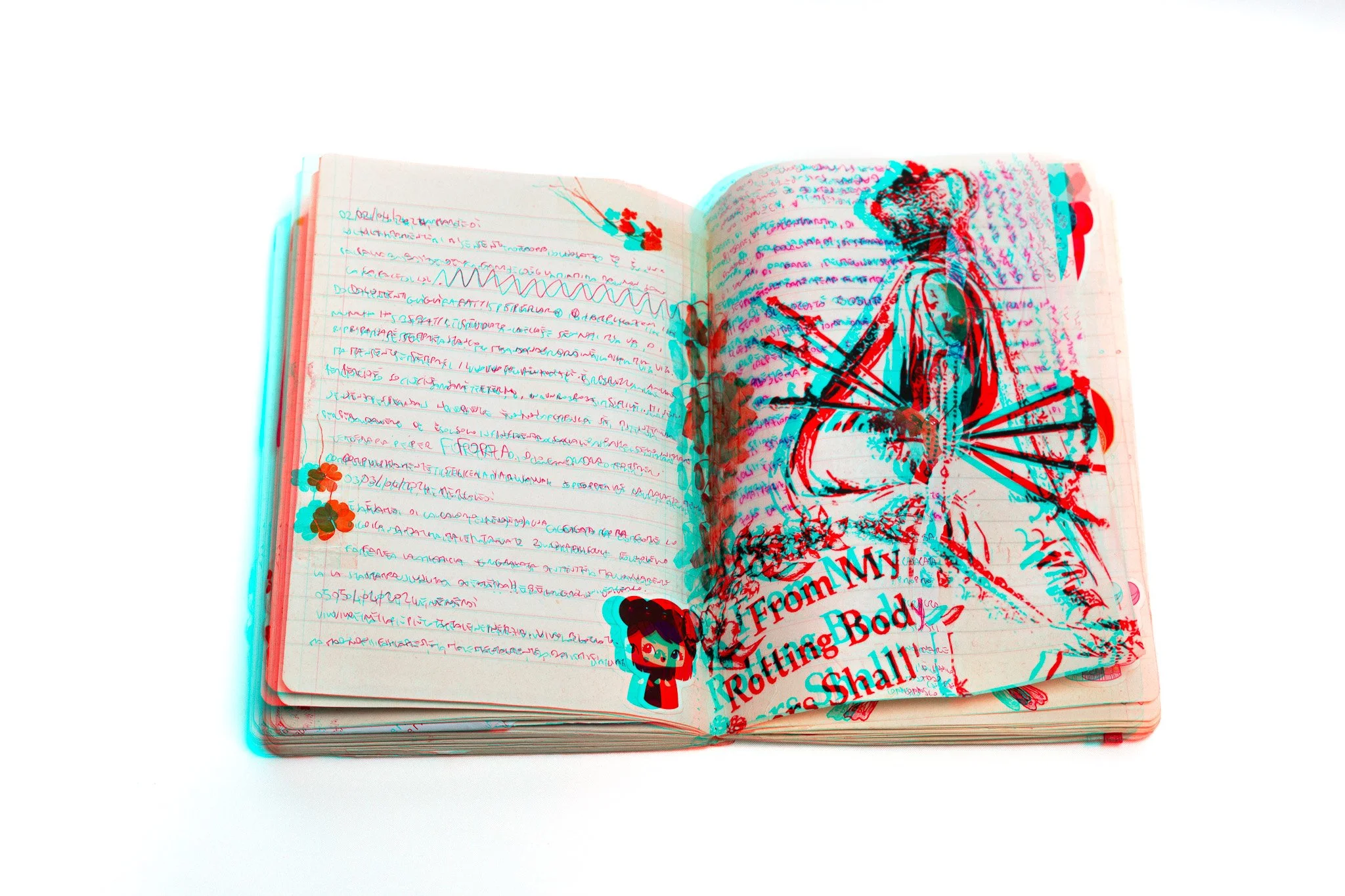
when the gods fall asleep

Realizing that you have been living someone else’s life is perhaps the most painful part.
There is a powerful sense of freedom and fulfillment in the definitive awareness that one must change sex, if that is how it can be put, yet at the same time there is an equally strong realization that, until that moment, one had not truly been living for oneself.
Equally difficult is making peace with lost time, with an inverted childhood and a repressed adolescence.
In my case, understanding that I am a woman brought everything into order: at that point I was finally able to make sense of my instincts, my needs, my preferences, and my choices, and, looking back, it became easy to see how many clear signs of my feminine essence had always been there, and how much effort I had put—against my own interests—into ignoring them, even though I was never very good at doing so.
I have never been able not to feel women as my equals, as sisters, and men as something first unexplored, and only later—only then—explorable, yet distant, faded, incomprehensible.
I always perceived that existential arrangement as alien and, on my own skin, profoundly inappropriate and unpleasant; yet lacking both the means and the awareness to confront it, I found myself, suffocating, surviving within that body like a poor boa constrictor in a glass terrarium.
I tried to do what I could, and I was fortunate to be partially supported by my family; I was always allowed all the “femininities” I felt appropriate—in games, films, cartoons, music, sports—but it was nonetheless impossible not to notice the differences between myself and other girls, both in appearance and in their intrinsic coherence.
Surrounded by my personal gynaeceum, always and forever, I watched my body slowly bend to its nature and inevitably deform into a male body. The sensations were intense, but I was not lucid.
To protect myself, I remained entirely unaware and developed a strong sense of detachment from my appearance, which, for many years, I neglected completely. My discomfort and the lack of a young woman suffocated in that underdevelopment nonetheless surfaced in moments of deep existential anguish, aggression, and irritability.
I continued to deny myself and stubbornly focused on the traumas I was conscious of, attempting to attribute everything to them, rather than surrendering to my truth.
ABSTRACT.

When the Gods Fall Asleep is a manifesto, it emerges as an act of rupture against the colonial, religious, and binary legacy that structures trans existence and continue to govern life through normative violence. In Italy, medicine, law, and Catholic morality do not protect: they discipline. They do not recognize: they correct. They do not heal: they control.
Gender binarism is a colonial technology. It produces hierarchies, assigns value, and decides who is human and who is expendable. Medicine has turned trans identities into diagnoses; the law into practices of surveillance; religion into guilt. This system is not broken—it functions exactly as it was designed to.